



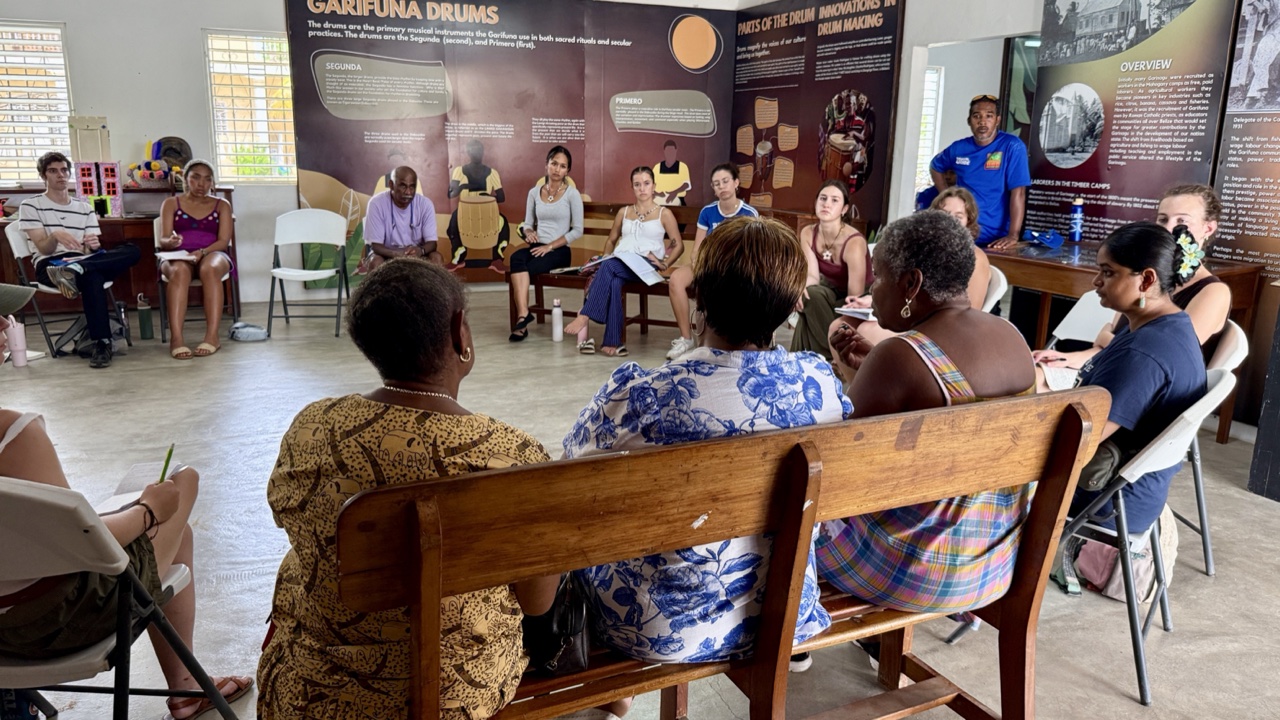
DANGRIGA, Belize — Visiting students from the University of Florida received a passionate lesson on Garifuna identity, cultural preservation, and indigenous rights during a recent visit to the Gulisi Garifuna Museum in Dangriga Town.
Addressing approximately 30 students and their professor, Rosita Alvarez, President of the National Garifuna Council (NGC) Dangriga Branch, spoke candidly about the challenges facing the Garifuna people and the importance of protecting their language, culture, and ancestral lands.
Alvarez used the opportunity not only to educate the visiting group about Garifuna history and traditions but also to highlight contemporary issues that continue to affect indigenous communities in Belize.
Among the concerns she raised was the growing pressure on Garifuna ancestral lands, which she described as an issue that requires urgent attention from both community leaders and organizations charged with safeguarding Garifuna interests.
“There is a lot that NGC could have done and still could do when it comes to safeguarding our people and our language,” Alvarez told the students, explaining that the organization is now taking steps to address some of these longstanding concerns.
She stressed that communities should not wait until problems become severe before taking action and encouraged greater vigilance in protecting Garifuna heritage for future generations.
Throughout her presentation, Alvarez emphasized the importance of community empowerment and education. She challenged educated members of the Garifuna community to ensure that knowledge is shared broadly and not confined to a small group of individuals.
“We need to bring our people together and we need to bring our people along,” she said, underscoring the need for collective advancement and cultural continuity.
One of the central themes of her presentation was the preservation of the Garifuna language. Speaking to the students about the value of linguistic identity, Alvarez encouraged Garifuna people to speak their language proudly wherever they travel.
To illustrate her point, she shared a personal experience from a family trip to Japan. While speaking Garifuna at Narita International Airport, an immigration officer recognized the language from previous encounters with Belizeans and expressed admiration for hearing people maintain their native language abroad. The experience, Alvarez said, reinforced her belief that language preservation is a source of pride and cultural strength.
She also encouraged Garifuna people to embrace traditional dress and cultural customs, noting that many indigenous and African communities around the world proudly wear traditional attire regardless of where they are.
“Our ancestors gave us that,” Alvarez remarked as she encouraged the visiting students to appreciate the importance of cultural identity and heritage preservation.
The presentation formed part of an educational visit to the Gulisi Garifuna Museum, where students were given firsthand insight into the history, traditions, struggles, and resilience of the Garifuna people.
As Belize continues to navigate conversations surrounding indigenous rights, cultural preservation, and land ownership, Alvarez’s message served as a reminder that protecting culture requires more than celebration—it requires active participation, education, and community leadership.
For the visiting University of Florida students, the encounter offered a deeper understanding of one of Belize’s most vibrant cultures and the ongoing efforts to preserve it for generations to come.
